

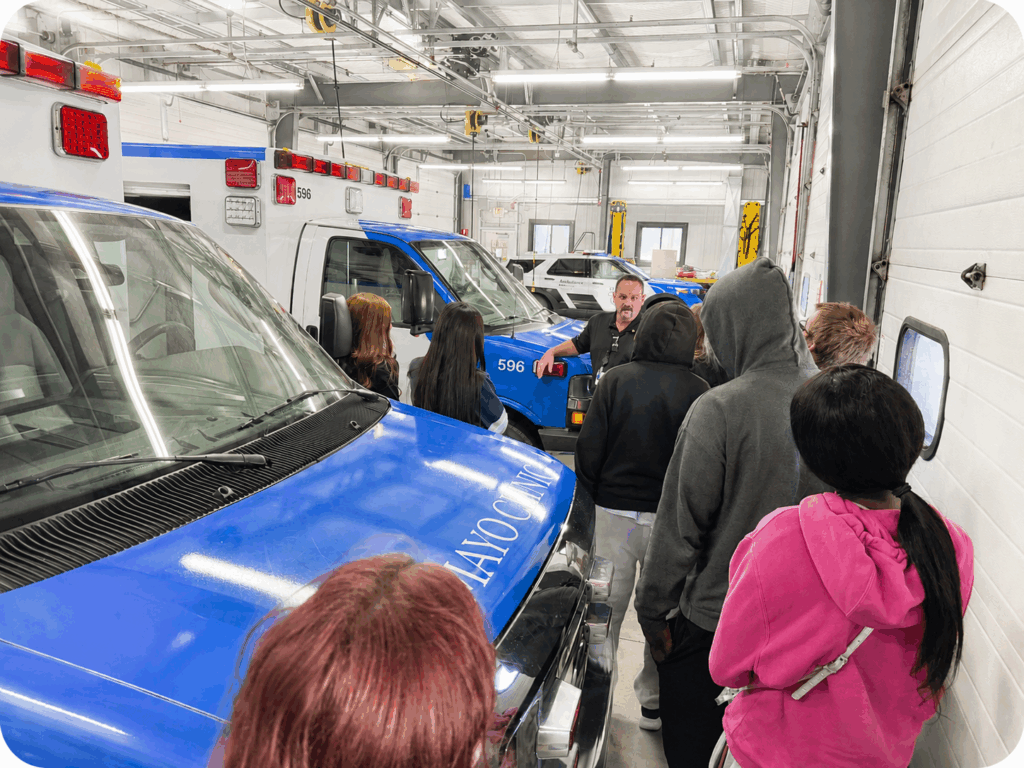
During a visit to Mayo Clinic Ambulance Station #1 on May 1, students participating in an Emergency Medical Responder (EMR) course through Project Success and South Central College stepped inside ambulances, met emergency response professionals, and explored firsthand what careers in healthcare can look like beyond the classroom.
For many students, the experience made future possibilities feel real.
The course is part of the second year of a growing partnership between Project Success, Central High School in Mankato, and South Central College through the Project Success Institute’s Pathways programming. After helping students access Certified Nursing Assistant (CNA) training last year, this year’s cohort focused on emergency medical response, giving students hands-on exposure to healthcare careers through classroom instruction, real-world training, and career-connected learning experiences.
Over 12 sessions at South Central College, students learned foundational emergency response skills through lectures, demonstrations, simulations, and hands-on training. Students practiced CPR, airway management, patient monitoring, trauma response, and safely lifting and moving patients while learning how to stay calm and respond quickly in emergency situations.
For Central High School Principal Marti Sievek, programs like this help students begin to imagine futures they may not have otherwise seen for themselves.
"We don’t know and we can’t decide for students what will light their spark,” said Sievek. “We can give them opportunities.”
That spirit of exploration and opportunity sits at the heart of the Career Pathways program. Through partnerships with schools, colleges, and industry professionals, students are able to explore career interests while gaining practical experience and building confidence in themselves along the way.
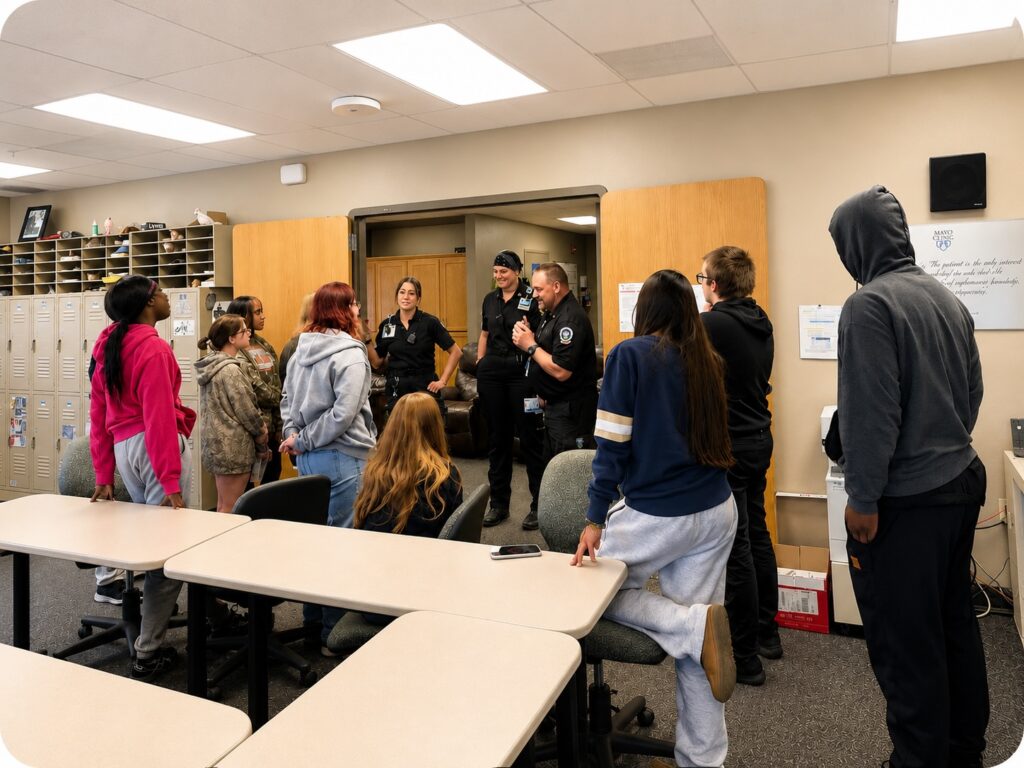
The Mayo Clinic visit gave students the chance to connect what they were learning in class to real healthcare environments. Students toured emergency response spaces, explored ambulances, and heard directly from professionals working in the field. Those experiences allow students to picture themselves in spaces they may never have imagined before.
Throughout the program, students reflected on how meaningful it was to engage in hands-on learning and hear real-life stories from professionals working in healthcare. Several students shared that the experience helped them feel more confident about their future goals while introducing them to careers they had never fully considered before. For others, it helped confirm an interest they already hoped to pursue.
One student reflected that the course “made me feel calmer in situations where I might’ve freaked out before.”
Project Success Senior Education Advisor Dr. Elia Dimayuga-Bruggeman says creating access and removing barriers is a key part of the organization’s approach to career-connected learning.
“We are meeting students where they are at by eliminating all barriers to the access that they need,” said Dr. Dimayuga-Bruggeman.
Through the program, students received support with transportation, meals, training materials, and access to college-level EMR coursework at South Central College. Alongside learning practical emergency response skills, many students also gained confidence in themselves and a clearer sense of what future careers in healthcare could look like.
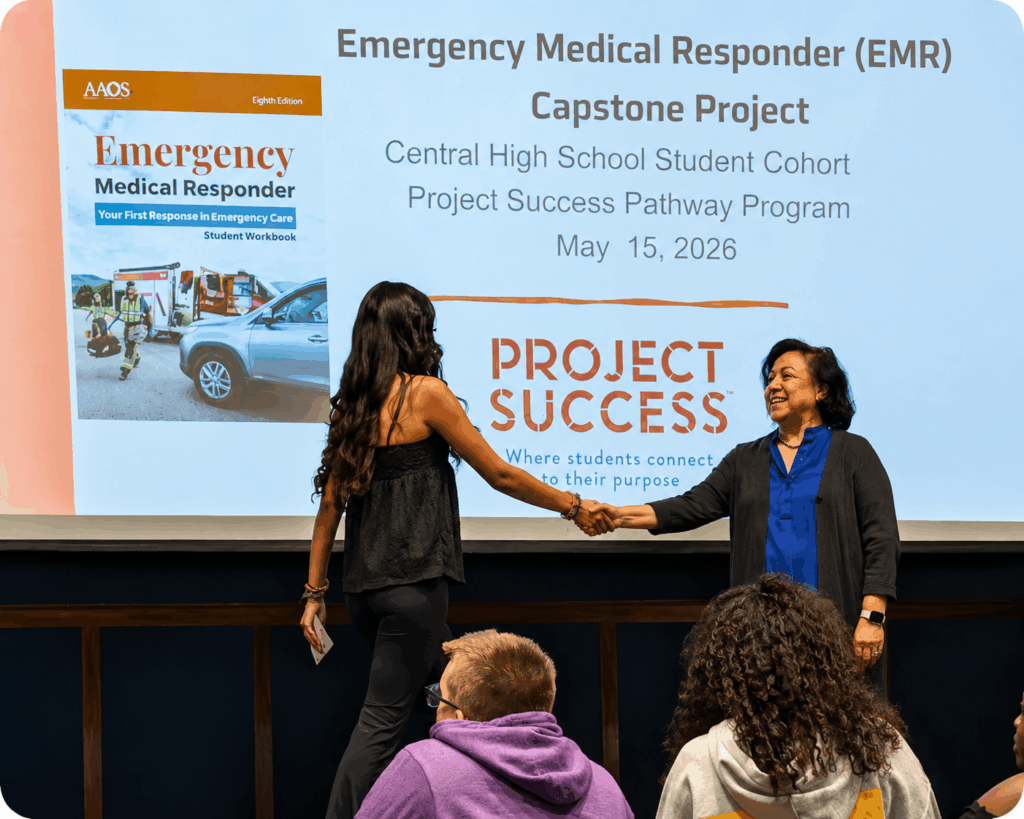
As students presented their capstone projects on May 15, the atmosphere reflected more than the completion of a course. It reflected growth in confidence, curiosity, and possibility.
As the partnership between Project Success, Central High School, and South Central College continues to grow, programs like EMR training are helping students connect classroom learning to real-world experiences and discover what may be possible for their future along the way.
Principal Sievek, says those opportunities can be transformational: